

Ivory Cane vs. Golden Cane: Why Pinanga coronata Wins in the Wet Tropics
Author: Ann Cains Date Posted:29 May 2026
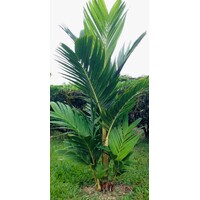

Pinanga coronata Ready to Go into Your Next Landscaping Job We have small Ivory Cane Palms available o the website but now we also have large landscaping specimens available for pick up at the nursery (cash only, no credit card facilities on site).
Ivory Cane vs. Golden Cane: Why Pinanga coronata Wins in the Wet Tropics
Tropical Gardening · Wet Tropics · Mission Beach · El Arish Tropical Exotics
The Golden Cane Palm (Dypsis lutescens) has long been the default screening palm across tropical Queensland — and it's easy to see why. It's fast-growing, widely available, and reliably lush. But if you want your garden to feel genuinely luxurious, like a private rainforest retreat rather than a holiday park, there's a far superior choice: Pinanga coronata, the Ivory Cane Palm.
|
The Upgrade Pinanga coronata Ivory Cane Palm — a refined, rainforest-native clustering palm built for the wet tropics, with extraordinary ornamental detail. |
The Workhorse Dypsis lutescens Golden Cane Palm — tough, common, and functional, but increasingly overused and less suited to high-humidity environments. |
Climate Suitability
Built for the wet tropics — not just surviving it
The Golden Cane Palm originates from Madagascar and tolerates tropical conditions well enough, but it was never evolved for the intense rainfall, humidity, and heat of far north Queensland. In consistently wet environments like Mission Beach, Golden Canes often develop fungal spotting on their fronds, their canes yellow unevenly, and they can look tatty during the wet season — demanding regular removal of dead material to stay presentable.
Pinanga coronata, by contrast, hails from the humid understorey forests of Southeast Asia and thrives in exactly the conditions Mission Beach delivers: warm, wet, and sheltered. It positively glows in high humidity. Fronds stay clean, lush, and deeply green year-round. It is, in the truest sense, a palm in its element in the wet tropics.
Growth Habit & Form
Elegant clustering growth that screens beautifully
Both palms are clumping species, which makes them ideal for screening — but they do it very differently. The Golden Cane Palm clumps densely and can grow to 6–8 metres, often becoming top-heavy and exposing bare canes at the base as it matures. In a garden context, this means your privacy screen gradually develops unsightly bare legs that require underplanting to conceal.
Pinanga coronata is a more refined proposition. It clusters with graceful, slender canes that maintain foliage from ground level upward, creating a dense, full screen without gaps. It typically reaches 4–6 metres — tall enough to block sightlines, compact enough to fit without overwhelming a garden or lifting nearby structures. The overall silhouette is softer, more layered, and more architectural than the Golden Cane's looser, fountaining form.
"Where a Golden Cane gives you a tropical feel, a Pinanga gives you a tropical atmosphere — something altogether richer and more immersive."
Standout Features
The details that make Pinanga coronata exceptional
|
|
The Seed Show
Fruit that turns heads and feeds wildlife
This is where Pinanga coronata truly separates itself from the Golden Cane in a way every garden visitor will notice. Golden Canes produce small, dull yellow-green fruit that passes entirely unremarked — not decorative, and of limited value to wildlife.
Pinanga coronata is in an entirely different league. The fruiting stalks emerge in clusters from between the lower leaf bases, carrying fruit through a theatrical colour progression — starting green, moving to orange, and finally burning a deep, glossy scarlet-red at maturity. Against the dark green foliage, this is genuinely striking. At Mission Beach, where cassowaries roam and a rich community of tropical birds passes through, the fruit is a magnet for wildlife. Your garden becomes part of the rainforest food web in a deeply satisfying way.
Luxury Aesthetic
The high-end, resort-quality look
There is a reason that boutique eco-lodges and high-end tropical resorts are increasingly specifying Pinanga species in their landscaping rather than reaching for the familiar Golden Cane. The Ivory Cane Palm reads as considered — a plant chosen by someone who knows their tropical palms, not simply the most available option from the local nursery.
Used as a feature palm, a single established clump of Pinanga coronata creates an immediate sense of place and intention. Used as a screening palm, a row of them creates the sensation of stepping into a private rainforest rather than merely blocking out a neighbour. The dense, layered foliage, the architectural canes, and the vivid fruiting display combine to produce a garden that feels curated, tropical, and genuinely luxurious.
Golden Cane looks like a holiday park. Pinanga coronata looks like Daintree Ecolodge.
Growing Guide
Best conditions for Pinanga coronata
The good news for Mission Beach and wet tropics gardeners is that Pinanga coronata essentially wants the conditions you already have. It's not a fussy plant — it's simply a plant that belongs here.
|
☀️ Light Prefers bright filtered light or dappled shade. Performs beautifully under the canopy of taller trees. Avoid harsh full afternoon sun during early establishment. |
|
Pests & Problems
What to watch for — and how to deal with it
One of Pinanga coronata's many virtues is that it is a genuinely low-pest palm in the wet tropics. In the right conditions it grows with vigour and largely looks after itself. That said, there are a few things worth keeping an eye on.
|
Scale insects Occasional Small brown or white scale can appear on fronds, particularly during dry periods or on stressed plants. White oil or neem oil spray handles most infestations. Good air circulation is the best preventative. |
Spider mites Occasional More likely in dry, hot spells than during the wet season. Misting the foliage and increasing watering usually deters them. Neem oil works well if populations establish. |
|
Fungal leaf spot Rare Occasionally appears in very poorly-drained situations. The solution is almost always improving drainage and airflow, not chemical treatment. Healthy, well-sited plants rarely show this. |
Root rot Rare Almost always a result of poor drainage. If fronds yellow and collapse in soggy soil, improve drainage immediately. Plant in raised beds if your site holds water. |
The important takeaway: most Pinanga problems are preventable with good siting. Give them shelter, good drainage, organic soil, and the humidity and warmth that Mission Beach provides naturally, and they will reward you with essentially trouble-free growing for years.
|
Available Now Get yours from El Arish Tropical Exotics Here at El Arish Tropical Exotics, we stock Pinanga coronata in a range of sizes to suit every budget and timeline — whether you're growing a garden patiently from scratch or want an instant result right now. |
Size |
What you get |
120mm pots |
Budget-friendly starter plants — perfect for growing on, landscaping in quantity, or giving Pinanga a go for the first time. |
180–200mm pots |
Well-established juvenile clumps, ready to go straight into the garden and take off quickly through the wet season. |
250–300mm pots |
Substantial clumping plants for gardeners who want real presence in the garden from day one with minimal wait time. |
12 inch pots — 2m tall |
Our premium stock — established clumps up to 2 metres tall delivering an instant screen and immediate wow factor. |
We're based in El Arish, Mission Beach — right in the heart of the wet tropics — so every plant we grow has already proven itself in your climate before it reaches your garden. Visit us by appointment to walk through the nursery and choose your plants in person, or shop online at elarishtropicalexotics.com with flat-rate postage across Queensland. Give us a call on 07 4068 5058 — we're always happy to talk palms.
|
The verdict If you're gardening in Mission Beach or the wider wet tropics and you want screening, Pinanga coronata is the clear choice. It outperforms the Golden Cane on climate suitability, growth habit, ornamental interest, seed display, wildlife value, and sheer aesthetic quality. It's easy to grow, low on pests, and genuinely thrives in the conditions you already have. The Golden Cane is a reliable workhorse — but in a landscape as extraordinary as the Mission Beach rainforest fringe, your garden deserves something that matches the setting. Come and see our range at El Arish Tropical Exotics. You won't look back. |